
You've probably heard it before, someone at a dinner party, a comment thread online, or a well-meaning friend raising concerns. "But isn't laser hair removal radiation? Can't that cause cancer?" It's one of the most common fears people bring into their first consultation. And honestly, the concern makes sense. The word "laser" sounds medical. It sounds powerful. It sounds like something that could go wrong.
But here's what the science consistently shows: Does laser hair removal cause cancer? No. There is no evidence that laser hair removal causes cancer. Available research has not found a link between laser hair removal and cancer.
What does this article cover?
- How laser hair removal actually works and what type of radiation it uses
- What decades of research and the FDA say about cancer risk
- Who should exercise extra caution before starting treatment
- What are the real, actual side effects of laser hair removal
Key Takeaways
- Laser hair removal uses non-ionizing light, the type that cannot break DNA bonds or cause mutation.
- Laser hair removal uses non-ionizing light, which is not known to damage DNA in the way ionizing radiation or UV radiation can
- Laser hair removal devices are FDA-cleared and confirmed safe for repeated use by trained providers.
- The American Cancer Society confirms that non-ionizing cosmetic laser light does not pose a cancer risk.
- Real side effects do occur, but they are mild, localized, and temporary, not cancer-related
How Does Laser Hair Removal Work?
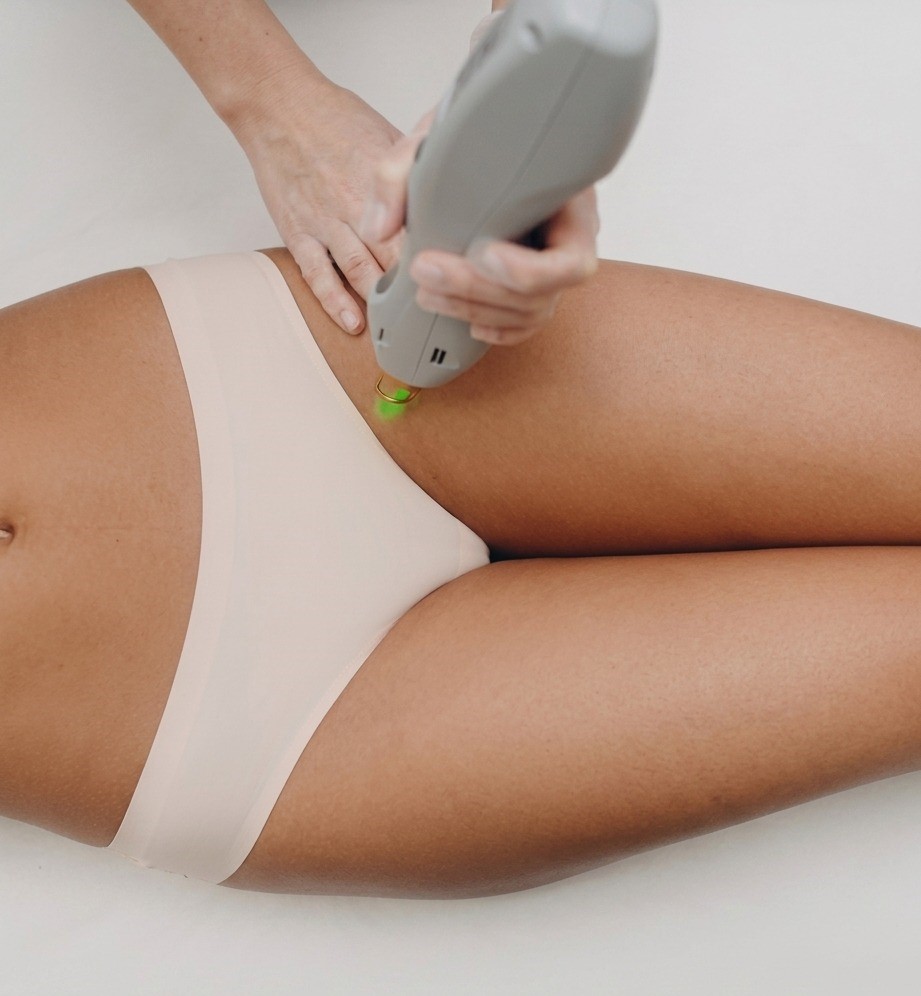
Laser hair removal targets the pigment (melanin) inside each hair follicle. A focused beam of light is directed at the skin. The melanin in the hair absorbs that light, which is then converted into heat. That heat damages the follicle at its root, disrupting its ability to produce new hair. The laser only penetrates about 4 mm (depending on device/settings) into the skin, just enough to reach the follicle, but no further.
It does not travel deeper into the body. It does not reach your organs, bloodstream, or lymph nodes. Each session typically lasts 5 to 60 minutes, depending on the area being treated. Most people need a series of sessions spaced several weeks apart, because the laser is most effective when the follicle is in its active growth phase.
%20(3).png)
What Is "Radiation" in This Context?
The fear around laser hair removal and cancer often comes from one word: radiation. People hear "radiation" and picture X-rays, nuclear exposure, or cancer treatment. That association is understandable, but it's inaccurate here.
Radiation exists on a spectrum. Ionizing radiation, such as X-rays, gamma rays, and nuclear materials, carries enough energy to break chemical bonds and damage DNA. Non-ionizing radiation, which includes visible light, radio waves, microwaves, and the light used in laser hair removal, does not. It cannot break molecular bonds. It cannot alter DNA. Laser hair removal uses non-ionizing light that interacts only with melanin in the hair follicle, not the DNA of surrounding skin cells. Think of it as closer to standing in sunlight than getting an X-ray, and even then, it doesn't include the UV component that can actually harm skin cells.
Does Laser Hair Removal Cause Cancer? What Does the Research Say?
This question has been studied seriously and repeatedly for over 25+ years. The conclusions are consistent. A study published in the Journal of the American Academy of Dermatology evaluated long-term effects of laser hair removal and found no evidence of increased cancer risk, confirming the procedure is safe for repeated use and does not contribute to malignant cell changes.
Research examining DNA damage markers, including thymine dimers linked to skin cancer risk, found no increase in DNA damage after laser sessions. A comprehensive review found no evidence of increased tumor formation even after repeated high-intensity light exposures. Studies looking specifically at underarm laser hair removal found no harm to nearby lymph nodes. The summary: laser hair removal does not cause cancer, does not damage DNA in ways that lead to cancer, and shows no association with increased cancer risk in short- or long-term follow-up.
What Does the FDA Say?
The U.S. Food and Drug Administration (FDA) classifies laser hair removal devices as safe for use when operated by trained professionals. Before a device reaches a clinic, it undergoes rigorous testing to confirm both its effectiveness and safety profile. No UV light is involved; the radiation type used has been confirmed as non-ionizing.
At New Day Medspa, we use the Candela® laser system, which is FDA-cleared and widely recognized as one of the safest and most effective technologies available across all skin tones.
What Does the American Cancer Society Say?
The American Cancer Society (ACS) confirms that non-ionizing radiation from cosmetic lasers does not pose a cancer risk. Their position is that this type of light only interacts with the skin's surface and does not affect deeper tissues or organs.
Confident the science checks out? Book your free laser hair removal consultation at New Day Medspa and see what our Candela® system can do for you.
What Are the Common Myths About Laser Hair Removal and Cancer?
1. Is laser hair removal the same as cancer radiation therapy?
This is not accurate. Radiation therapy for cancer uses targeted ionizing radiation to destroy tumor cells. Laser hair removal uses non-ionizing light to heat hair follicles. The mechanism, energy level, depth of penetration, and intent are completely different.
2. Can laser hit a mole and cause melanoma?
Laser practitioners are trained to avoid treating directly over raised moles or active skin lesions. When performed correctly, the laser targets only the hair follicle pigment. There is no credible evidence that laser exposure to surrounding skin causes melanoma.
3. Does underarm laser affect the lymph nodes?
The laser reaches a maximum depth of about 4 mm. Lymph nodes are located much deeper beneath the skin; the beam simply does not reach them. No research has shown any link between underarm laser hair removal and lymph node involvement or cancer.
4. Is repeated laser treatment dangerous long-term?
Long-term studies, including those following patients through multiple sessions over years, have found no increase in cancer risk or cumulative harm from repeated laser hair removal treatments.
5. Is facial laser riskier because the skin is thinner?
There is no evidence to support this. Facial hair removal is one of the most commonly performed laser treatments, and safety data show a favorable profile similar to that of other body areas.
Who Should Exercise Extra Caution?
While laser hair removal does not cause cancer, specific groups should consult a qualified, medically trained aesthetic provider before proceeding, not because of cancer risk, but because of other health or effectiveness considerations.
People with a personal history of skin cancer should discuss treatment with their dermatologist or oncologist first as a precautionary step, not an indication that the treatment is unsafe. People taking photosensitizing medications like isotretinoin or certain antibiotics should always disclose their full medication list during consultation, as these can increase sensitivity to light. Pregnant women are advised to wait until after delivery, due to insufficient research rather than the known cancer risk. People with very light, white, gray, or blonde hair may find the procedure less effective since the laser targets melanin. Those with active skin conditions like eczema or psoriasis in the treatment area may need timing or placement adjusted.
At New Day Medspa, every patient starts with a complimentary consultation to assess skin type, hair color, medical history, and goals before any treatment begins.
What Are the Real Side Effects of Laser Hair Removal?
Because the evidence on cancer is so clear, the honest conversation shifts to the side effects that do genuinely occur, mostly mild and temporary.
Redness and swelling are the most common reactions, typically resembling mild sunburn and resolving within hours to a couple of days. The treated area may feel tender or sensitive, and avoiding direct sun exposure during your treatment series is strongly recommended. Some patients notice mild, temporary pigmentation changes, darkening or lightening of the treated skin that resolves on its own. Rare blistering or burns can occur when treatment is performed by an inexperienced practitioner or with incorrect settings, which is exactly why provider expertise matters. Some patients notice temporary changes in ingrown hair patterns during the treatment series; over time, as follicles are disabled, ingrown hairs typically reduce significantly.
None of these side effects indicates an increased risk of cancer. They are localized, manageable, and temporary.
Questions about your specific skin type or medical history? Book a complimentary consultation at New Day Medspa → every new patient starts with a one-on-one assessment before any treatment begins.
Why Does Professional Treatment Matter?
The safety of laser hair removal is not just about the technology; it's about who's using it. The laser itself is non-ionizing, FDA-cleared, and cancer-safe. But a device in the hands of someone untrained can cause burns, scarring, or ineffective treatment. Settings too high for a particular skin tone can cause lasting pigmentation damage.
At New Day Medspa, treatments are performed by ARNPs and PAs with the clinical training to understand skin physiology, recognize contraindications, and customize every session to the patient in front of them. With over 500,000 treatments performed and more than 20 years of experience, safe outcomes result from expertise and process, not luck.
About New Day Medspa
New Day Medspa is a medically guided aesthetic practice in Jacksonville, FL, where laser hair removal is performed exclusively by licensed ARNPs and PAs trained in laser safety, skin physiology, and clinical assessment. The practice uses the Candela® laser system, an FDA-cleared platform known for its safety and efficacy across all skin tones. Every new patient begins with a complimentary consultation to ensure the treatment plan is appropriate for their specific skin type, hair color, and medical history.
Related Articles




.svg)