
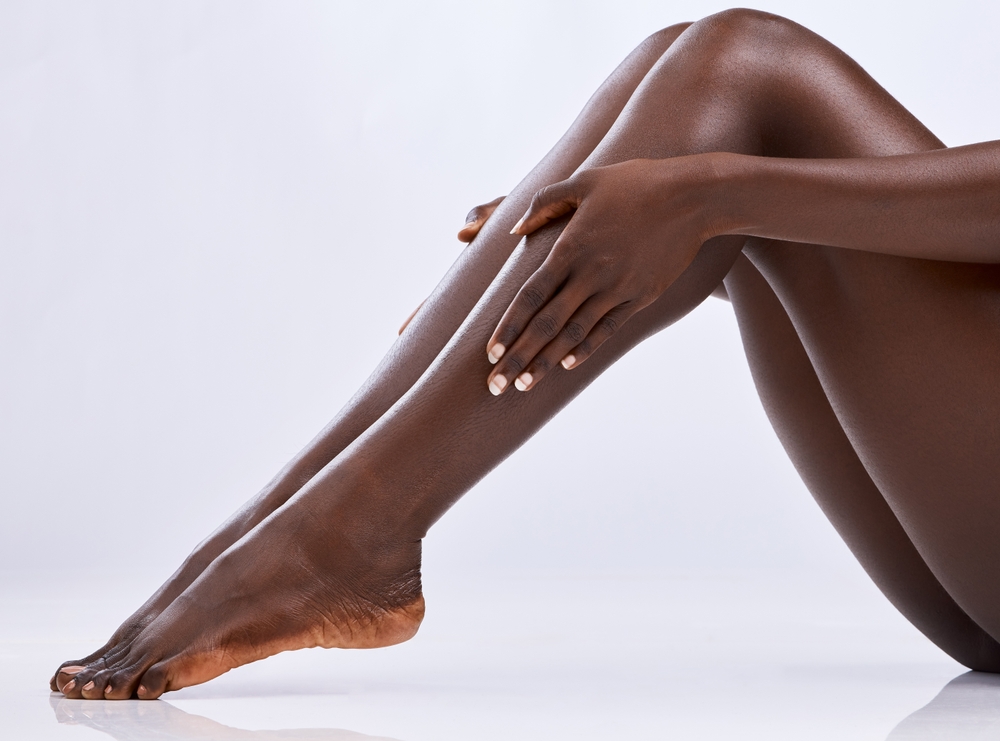
Laser hair removal on dark skin is one of the most asked-about topics at New Day Medspa, and also one of the most misunderstood. The short answer is yes, it works. But the longer, more useful answer is that it works when the right laser is used, settings are calibrated for your Fitzpatrick skin type, and the provider has real experience treating darker skin tones. In Jacksonville, FL, where the patient population reflects a wide range of skin tones, this isn't a niche concern. It's a standard part of practice.
What does this article cover?
- Why laser hair removal on dark skin requires a different approach than lighter skin tones
- Which lasers are safe and effective for dark skin, and which to avoid
- What laser hair removal on black skin before and after results actually look like
- How New Day Medspa approaches dark skin treatment in Jacksonville, FL
Key takeaways
- Laser hair removal on dark skin works but requires a longer-wavelength laser (Nd: YAG, 1064 nm) to avoid targeting surface melanin.
- Clinical studies show 54 to 78% average hair reduction for Fitzpatrick skin types IV to VI using the appropriate laser.
- The biggest risk with dark skin is post-inflammatory hyperpigmentation from the wrong laser or incorrect settings, not from laser treatment itself.
- Laser hair removal on black skin consistently yields positive results when the treatment protocol matches the skin type.
Why laser hair removal on dark skin is different
Laser hair removal works through selective photothermolysis: the laser targets melanin in the hair follicle and converts light energy into heat, damaging the follicle's ability to produce hair. The problem with darker skin tones is that melanin also exists in the surface layer of the skin (epidermis). When a laser's wavelength is too short, it can't distinguish between melanin in the follicle and melanin in the skin, absorbing energy in both locations. That's what causes burns, blistering, and post-inflammatory hyperpigmentation (PIH) in patients treated with the wrong device.
The solution isn't to avoid lasers. It's to use the right wavelength. Longer wavelengths bypass the melanin-rich epidermis and penetrate deeper into the dermis, where the follicle sits, producing effective hair reduction without the risk of surface skin damage.
%20(3).png)
Which laser is safe for dark skin?
Laser selection is the most important clinical decision in treating dark skin. Here's how the main options compare for Fitzpatrick skin types IV through VI:
The Nd: YAG 1064 nm laser is the clinical standard for laser hair removal on dark skin. Its longer wavelength passes through surface melanin without significant absorption and targets the follicle directly. Modern systems pair the Nd: YAG with integrated cooling to protect the skin's surface further during treatment.
A retrospective PubMed study of 150 patients with Fitzpatrick skin types IV to VI found that long-pulsed Nd: YAG laser produced a mean hair reduction of 54.3%, with 78.7% of patients rating the results as good or satisfactory, no complications in 86% of cases, and all complications being transient.
What do laser hair removal on black skin before and after results look like?
Laser hair removal on black skin before-and-after results are real and clinically supported, but they look different from those on lighter skin in a few ways. The primary difference is the number of sessions needed. Darker skin types often require more sessions (sometimes 8 to 10 rather than 6 to 8) because providers use more conservative per-session settings to minimize the risk of PIH. That means each session delivers slightly less aggressive energy, and more sessions are needed to achieve the same cumulative damage to follicles.
What patients consistently report in laser hair removal on black skin before and after comparisons:
- Significant reduction in hair density and thickness is visible in sessions three to four
- Finer, lighter, slower-growing regrowth throughout the series
- Reduction in ingrown hairs and razor bumps (pseudofolliculitis barbae), often from the first session onward
- No change in skin tone when the correct laser and settings are used
- Occasional mild PIH that resolves within 4 to 12 weeks if it occurs
The ingrown hair and razor bump benefit is particularly meaningful for patients with coarser, curlier hair textures. Pseudofolliculitis barbae is disproportionately common among Black patients and can be significantly reduced or resolved with a properly performed laser series.
What is the Fitzpatrick scale and why does it matter?
The Fitzpatrick skin type (FST) scale classifies skin tones from I (very fair, always burns) to VI (very dark, never burns). It's the clinical tool providers use to select the right laser wavelength and settings before every session. Here's a quick reference:
If a provider doesn't assess your Fitzpatrick skin type before your first session, that's a significant red flag. Skin type assessment is the foundation of safe, effective laser treatment for any patient, and it's non-negotiable for darker skin tones.
Expert tip: "One thing that surprises patients with darker skin is that the Nd: YAG can sometimes feel more intense during treatment than shorter wavelength lasers, even though it's safer for their skin type. Higher energy is needed at 1064 nm to achieve the same follicle damage. That's a trade-off worth knowing about upfront, not a sign that something is wrong. Modern cooling systems manage the surface temperature during each pulse so it stays in the safe range." — New Day Medspa providers.
Want to find out which laser is right for your specific skin tone in Jacksonville? Book a complimentary consultation at New Day Medspa in Jacksonville, FL. Licensed ARNPs and PAs assess your Fitzpatrick skin type, review your hair type and treatment area, and confirm which laser protocol is appropriate before any sessions are scheduled.
What results timeline should dark-skinned patients expect?
Laser hair removal on dark skin follows the same cycle-dependent process as any skin type, but with a few timeline differences:
Dark-skinned patients may achieve the same or better final reduction percentages as lighter-skinned patients, but often require more sessions to reach that endpoint. Setting that expectation at the start prevents frustration mid-series.
Risks specific to laser hair removal on dark skin
Being honest about risks builds more trust than glossing over them. The main risk for darker skin types is post-inflammatory hyperpigmentation (PIH): darkening of the skin in or around the treatment area following laser energy. PIH is not a burn or permanent damage. It's a melanin response to inflammation that typically resolves within 4 to 12 weeks with proper sun protection.
PIH risk is managed by:
- Using the correct laser (Nd: YAG 1064 nm)
- Using conservative settings calibrated to your specific Fitzpatrick type
- Avoiding sun exposure before and after each session
- Using daily SPF 30 or higher on treated areas throughout the series
- Never treat freshly tanned skin
Hypopigmentation (lightening of the skin) is a less common risk. It is more commonly associated with incorrect laser selection or excessive settings than with the Nd: YAG protocol used for dark skin.
What to look for in a Jacksonville provider for dark skin laser treatment
Not every medspa in Jacksonville has experience treating darker skin tones. Before booking, ask these specific questions:
- What laser system do you use for Fitzpatrick skin types IV, V, and VI?
- Do you have before-and-after photos of patients with my skin tone?
- Who performs the treatment, and what is their experience with darker skin types?
- What settings protocol do you use to minimize the risk of PIH?
A provider who can answer these questions clearly and specifically has done this before. A vague or redirecting answer is a reason to look elsewhere.
About New Day Medspa
New Day Medspa is a medically guided aesthetic practice with a location in Jacksonville, FL. All laser hair removal treatments are performed by licensed ARNPs and PAs with specialized training in laser technology and treatment protocols for the full Fitzpatrick scale, including darker skin tones. Every patient receives a complimentary consultation that includes a formal skin type assessment and a specific laser protocol recommendation before any sessions begin.
Suggested articles
Is Laser Hair Removal Worth It? What Jacksonville Residents Need to Know — The pillar post for this content cluster. Covers how laser hair removal works across skin types, who the best candidates are, and what long-term results look like in Jacksonville's climate.
Does Laser Hair Removal Hurt? What to Expect at Your First Session — Covers what sessions feel like in detail, including the specific sensation differences between laser types, which is directly relevant for dark skin patients using Nd: YAG.
Laser Hair Removal and Sun Exposure: Jacksonville Summer Guide — Extends the sun-avoidance and SPF guidance, which is especially critical for dark-skinned patients managing PIH risk throughout their series.





.svg)