
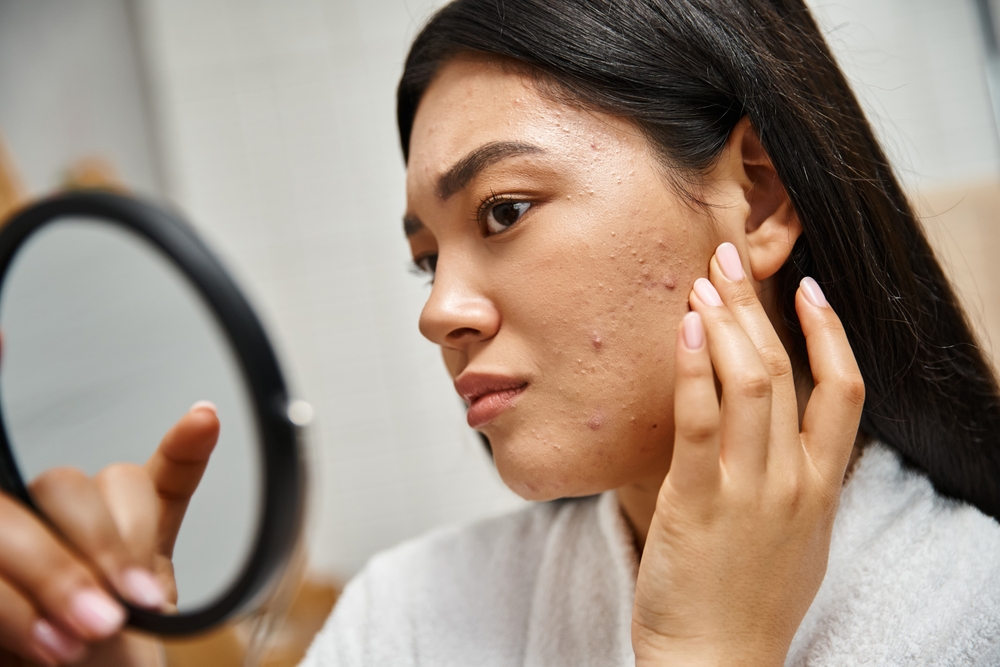
September is PCOS Awareness Month, and most of what gets shared during it is a symptom checklist that reads more like a textbook than an experience. Women with PCOS symptoms live with a lot more nuance than "irregular periods and acne." Some deal with hair growth in places they never expected. Others lose hair from their scalp while gaining it on their chin. Here's what PCOS actually tends to look like day-to-day, how common it really is, and what's specifically treatable if unwanted hair is the symptom bothering you most.
What does this article cover?
- What PCOS symptoms actually look like, beyond the standard checklist
- How common PCOS really is among women of reproductive age, according to current research
- Why unwanted hair growth is one of the more visible and more treatable symptoms
- What your options look like if hair is the specific symptom you want to address right now
Key takeaways
- A 2023 US population-based study found PCOS prevalence at 5.2%, nearly double earlier estimates of 2.9% that relied only on insurance diagnosis codes. A lot of PCOS has been going unrecorded, not necessarily undiagnosed.
- Symptoms show up in different combinations for different people. Irregular periods, acne, scalp hair thinning, weight changes, and excess facial or body hair can all appear, but rarely all at once in the same person.
- Hirsutism, excess hair growth driven by elevated androgens, is one of the more visible PCOS symptoms and one of the few with a well-studied cosmetic treatment: laser hair removal.
- Laser hair removal for PCOS-related hair growth starts at $199 per treatment or $99 per month at New Day Medspa in Jacksonville, FL.
What is PCOS, and why does it get a whole month?
Polycystic ovary syndrome is a hormonal condition involving elevated androgens, irregular ovulation, and, in many but not all cases, small cysts on the ovaries. September was designated PCOS Awareness Month specifically because the condition is common, under-discussed, and frequently misdiagnosed or dismissed for years before someone gets real answers.
That delay matters. Symptoms often start around puberty, but women commonly don't get a diagnosis until their twenties or later, sometimes only after struggling to get pregnant prompts a deeper workup.
%20(3).png)
What women with PCOS symptoms actually experience
The standard PCOS checklist lists irregular periods, acne, weight gain, and excess hair growth as if they show up as a matching set. In practice, most women get some combination, not all of it, and the mix looks different from person to person.
Not everyone experiences the emotional side the same way. For some women, the hair growth is the symptom that affects daily confidence the most, more than the metabolic or fertility-related aspects doctors tend to focus on first. That's a valid priority, even if it isn't the symptom that shows up on a diagnostic checklist.
How common is PCOS, really?
More common than most people assume, and increasingly recognized as such. A 2023 US population-based study tracking patients over more than a decade found PCOS prevalence at 5.2%, nearly double the 2.9% figure that earlier estimates relied on when they counted only formal insurance diagnosis codes. The researchers also found PCOS diagnosis rates four to five times higher than reported figures from the UK, which likely reflects differences in screening and awareness rather than an actual difference in how common the condition is.
Source: pubmed.ncbi.nlm.nih.gov/37061077)
None of this is trivial. If you've been told your symptoms are "probably nothing" or chalked up to stress, PCOS affecting roughly 1 in 20 women is a reasonable thing to bring up at your next appointment.
What you can actually do about PCOS-related hair growth
Medical management of PCOS, whether that's hormonal birth control, metformin, or other treatments an OB-GYN or endocrinologist might prescribe, addresses the underlying hormone levels. It doesn't necessarily remove hair that's already grown in, and for many women, that visible hair is what they want handled sooner rather than later.
Laser hair removal is the most studied cosmetic option for PCOS-related hirsutism. It targets hair that's already there, reducing it over a series of sessions, but it doesn't correct the androgen levels that cause new hair to start.
Ready to talk through what your specific hair pattern would need? Book a complimentary consultation at New Day Medspa, where a licensed ARNP or PA reviews your history and gives you a realistic session plan and price before scheduling anything.
When to see a doctor vs. when to book a cosmetic consultation
These aren't competing paths, and treating them that way slows people down. A doctor diagnoses PCOS, rules out other conditions with similar symptoms, and manages the hormonal side. A medical aesthetics provider treats the visible hair growth once you know what you're dealing with, or even while you're still working through diagnosis, since laser hair removal doesn't require a PCOS diagnosis to be effective. Plenty of patients start laser treatment before they've finished the diagnostic process with their doctor, simply because the hair itself is bothering them now.
Expert tip: If you suspect PCOS but haven't been formally diagnosed yet, track your symptoms, cycle length, new hair growth locations, and any skin changes for a month or two before your doctor's appointment. Specific, dated details make it much easier for a physician to evaluate what's actually going on instead of relying on your memory of "it's been a while."
About New Day Medspa
New Day Medspa is a medically guided aesthetic practice in Jacksonville, FL. Laser hair removal for PCOS-related and other hair growth is performed by licensed ARNPs and PAs, not estheticians, which matters for hormonally driven hair specifically. Every new patient starts with a complimentary consultation, so we set a realistic plan and price before booking any treatment.
Suggested articles
Does Laser Hair Removal Work for PCOS? A Jacksonville Provider's Guide covers the clinical research behind laser treatment for PCOS-related hair growth across all treatment areas.
How to Get Rid of PCOS Chin Hair: Laser Options That Actually Work narrows in on the chin and jawline specifically, including which laser types perform best there.
Hirsutism and Laser Hair Removal: What Causes Excess Hair Growth and How Laser Treatment Helps goes deeper into the biology of hirsutism for readers who want the fuller clinical picture.



.svg)