
Some people smile and show a band of gum above their top teeth. Others notice it in photos and start smiling with their lips pressed together. If that sounds familiar, you have probably searched for how to get rid of a gummy smile and landed on Botox.
For a gummy smile caused by an overactive upper lip, a small dose of Botox can lower the lip's lift and cover more of the gum. It does not work for every cause. This guide covers what causes a gummy smile, what Botox gummy smile before-and-after results look like, how many units are typical, and what else works when Botox does not.
What does this article cover?
- What causes a gummy smile and why Botox can help
- What gummy smile Botox before and after results look like, and how long they last
- How many units are used and what that costs at New Day Medspa in Jacksonville
- What to do if Botox is not the right fix
Key takeaways
- A gummy smile has several causes; Botox only helps when the upper lip lifts too high, not when the cause is bone or gum tissue.
- Botox can lower how high the lip lifts, so less gum shows; full effect is visible around day 14, and results fade over a few months
- A gummy smile usually takes fewer units than other areas; New Day Medspa wrinkle relaxers start at $8.99 per unit, and your provider sets the dose at your consultation.
- Financing through Cherry, PatientFi, Afterpay, and Klarna is available.
All botulinum toxin products carry an FDA Boxed Warning about the potential for toxin effects to spread beyond the injection site. At cosmetic doses, this is rare, but your provider will review this with you before treatment.
What causes a gummy smile?
A gummy smile means more than about 2 to 3 millimeters of gum shows when you smile. The reason matters, because it decides whether Botox can help.
Most gummy smiles involve more than one cause. A dentist or periodontist can tell you which ones apply to you.

How Botox treats a gummy smile
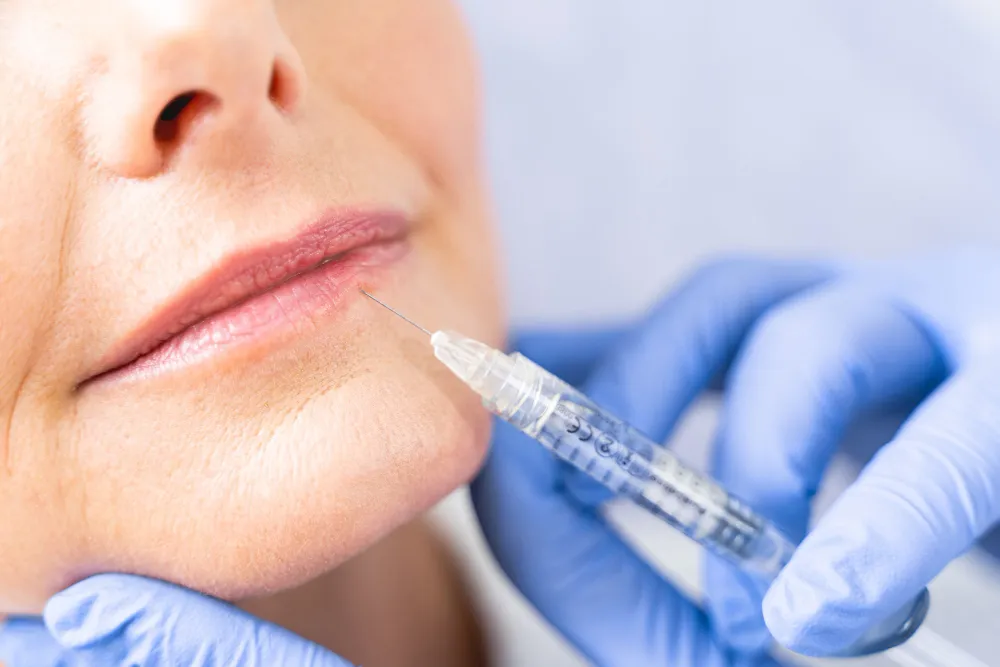
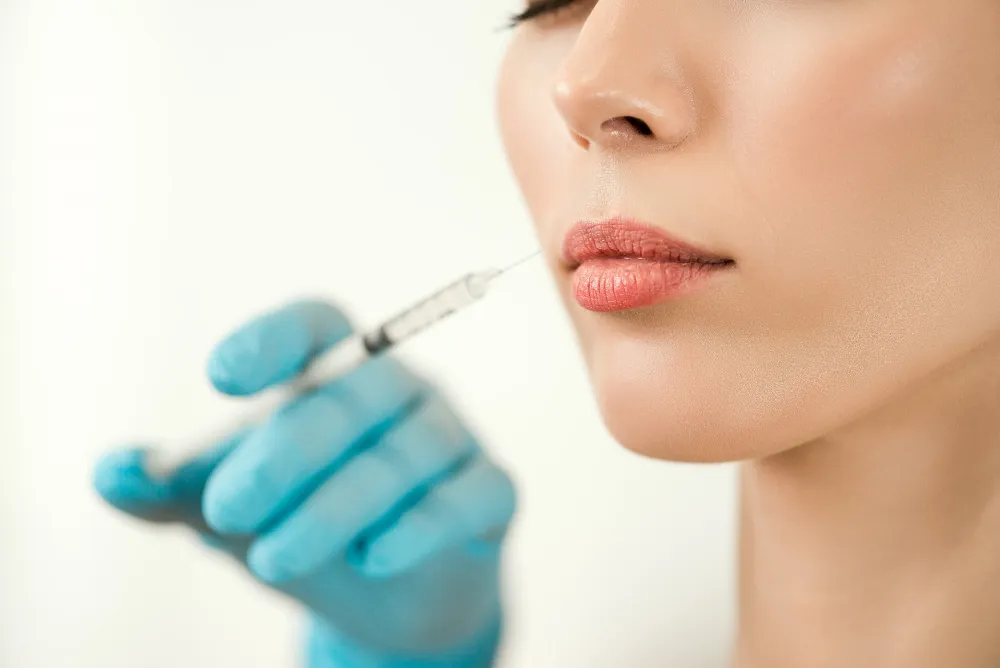
When you smile, a small group of muscles around the nose and upper lip lift the lip. The toxin is injected into the levator labii superioris, levator labii superioris alaeque nasi, and zygomaticus minor. Slightly weakening those muscles lets the lip rise less, so it covers more of the gum.
The goal is a smile with less gum showing, not a frozen one. Too much toxin can flatten the smile or make the upper lip feel tight, which is why the dose stays small and is chosen by your provider.
The gummy smile treatment is an off-label use of botulinum toxin. Your provider will explain what that means at your consultation.
Gummy smile Botox before and after: what changes
Before treatment, the upper lip lifts high on a full smile, and a band of gum shows above the teeth. After treatment, the lip rises less, the teeth look more evenly framed, and most of the gum is covered.
Most people see the full change around day 14. How much gum is covered depends on how high your lip lifts and how much gum shows to begin with, so results vary from person to person.
Expert tip: Take a photo of your full smile before your appointment, then another at day 14. Mirrors are unreliable for this because you smile differently when you are looking at yourself. A side-by-side comparison also gives your provider something specific to work from if a small adjustment is needed.
How many units does a gummy smile take?
A gummy smile takes fewer units than most areas because the muscles are small. The number depends on how high your lip lifts, how much gum shows, and how strong the muscles are.
At New Day Medspa, wrinkle relaxers start at $8.99 per unit. This table shows the arithmetic at that rate and is not a quote; your provider confirms the units before anything is injected.
Book a complimentary consultation at New Day Medspa to find out whether your gummy smile is muscle-related and what dose fits your lip movement. Financing is available through Cherry, PatientFi, Afterpay, and Klarna.
What the appointment involves
Your provider starts by watching you smile, at rest and fully, to see which muscles are doing the lifting and how much gum shows. Photos are taken.
The injections themselves are quick. A few tiny injections go on each side of the nose, at the spots where those lifting muscles sit. Most patients describe pinching and mild stinging, and the visit is usually short. There is no downtime, though a small bump or mark at the injection points is common and fades quickly.
Avoid rubbing the area and skip hard workouts for 24 hours. For more on aftercare, Botox for 11 Lines in Jacksonville: How Many Units, What It Costs, and What to Expect covers the standard first-day rules.
Side effects and risks
Common side effects are injection-site pain, swelling, small bruises, mild redness, and sometimes an asymmetric smile.
The risk worth understanding is a smile that looks flatter or stiffer than before. That happens when the dose is too high or placed too widely, and it lasts until the toxin wears off, which can be a few months. A lower starting dose and a follow-up visit can help prevent it. Patients with a short upper lip or a lip that already feels tight should talk through this before treatment.
How to get rid of a gummy smile when Botox is not the answer
Botox is a good trial run for the lip-lift cause because it is reversible. If it works, you know what a surgical fix would aim for.
About New Day Medspa
New Day Medspa is a medically guided aesthetic practice at 6817 Southpoint Parkway, Suite 2501, Jacksonville, FL 32216. All wrinkle relaxer treatments are performed by licensed ARNPs and PAs. A complimentary consultation reviews your smile, your goals, and the unit count before anything is injected, and wrinkle relaxers start at $8.99 per unit.
Suggested articles
Bunny Lines Botox in Jacksonville: What It Fixes, How Many Units, and What to Expect covers the nose-wrinkle area next to the muscles involved in a gummy smile.
Botox Brow Lift in Jacksonville: Before and After Results, Units, and What to Expect shows how small, targeted doses change facial movement in another off-label area.
Botox for 11 Lines in Jacksonville: How Many Units, What It Costs, and What to Expect explains how units, cost, and onset work for one of the most common treatment areas.