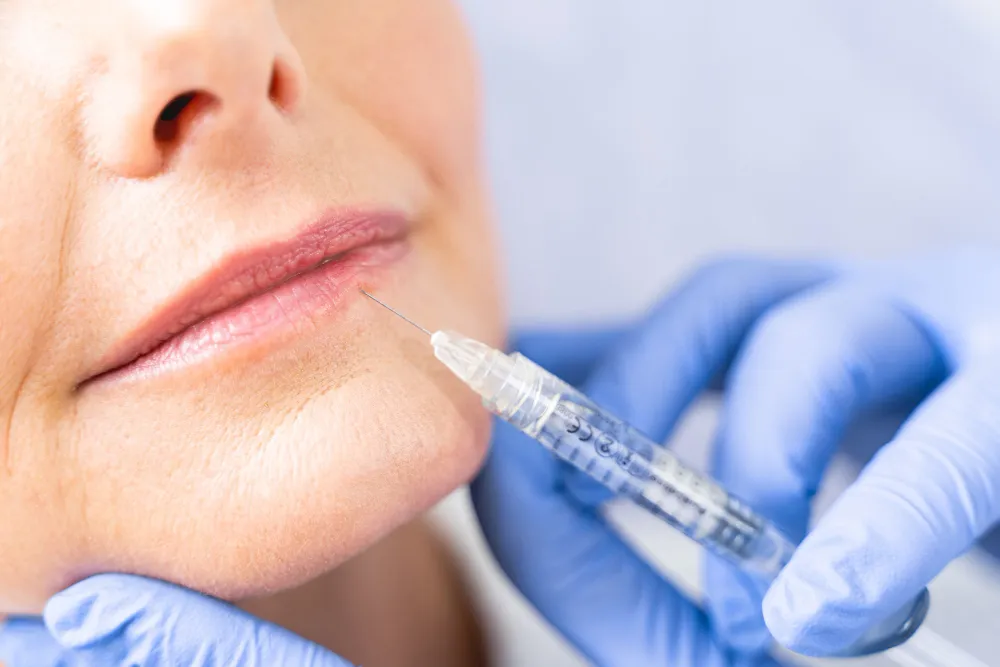

You looked in the mirror the morning after filler, and something was off. One cheek looked puffier than the other, or there was a purple mark near the injection site you didn't expect. It is a bit alarming the first time.
Most bruising after filler is normal, and most swelling peaks within a couple of days and fades on a predictable schedule. This guide covers what normal looks like, how long it lasts, and the few signs that mean you should not wait.
What does this article cover?
- How common bruising after filler is and how long it lasts
- What normal swelling after filler looks like, day by day
- How to cut down on both before and after your appointment
- The signs that need a call to your provider
Key takeaways
- Bruising is the most common side effect of filler injections; in a clinical review, healthy patients' bruises usually cleared within 10 to 14 days.
- Swelling is normal, peaks in the first one to two days, and mostly settles within about a week; lips and the jaw angle can take longer.
- Small habits help: skip blood thinners and alcohol before treatment, use a cold compress, and avoid hard workouts for 24 hours.
- At New Day Medspa in Jacksonville, filler starts at $499 per area, with financing through Cherry, PatientFi, Afterpay, and Klarna.
How common is bruising after filler?
More common than most people expect. A clinical review in the Journal of Clinical and Aesthetic Dermatology calls bruising the most common adverse event with dermal filler injections. One study it cites found that 19 to 24 percent of patients bruised after filler, and another reported rates as high as 68 percent. The review adds that in healthy people, a bruise will usually resolve within 10 to 14 days, though it can take longer. (JCAD)
That range is wide for a reason. A bruise is blood leaking from a punctured vessel into the skin, and whether a needle hits one depends on the area, the technique, and your own skin. Some people bruise at every appointment. Others never do.
Having a bruise does not mean something went wrong. It means a small vessel got nicked.

What is normal swelling after filler?
Swelling is the body's response to the needle and to the product itself. Hyaluronic acid filler attracts water, so the treated area can look fuller than your final result for a few days.
Normal swelling looks like this: soft, a little uneven, worse in the morning, and gradually easing. It rarely stays the same size from one day to the next.
Timing shifts a little by person. Photos taken on day 3 are not your result.
Expert tip: Take a quick photo of your face in the same light each morning for the first week. Swelling is hard to judge in a mirror because you see it daily, but a photo on day 2 next to a photo on day 6 shows the progress clearly. It also gives your provider something concrete if you do call.
Where swelling lasts longest
Different areas settle on different schedules. These are typical, not promises.
For more on the lip timeline, Aftercare for Lip Fillers walks through it day by day.
Book a complimentary consultation at New Day Medspa to talk through your goals, what recovery looks like for your treatment area, and how to plan around any events.
Why some people bruise more than others
Part of it is luck. Part of it is what is in your system.
The review points to a few clear contributors: blood thinners such as aspirin and other NSAIDs; alcohol; supplements like fish oil, garlic, high-dose vitamin E, and ginkgo; steroids; thin or older skin; and low iron or vitamin C. Technique matters too. Fanning or threading with a sharp needle bruises more than single or serial puncture, and larger needles and faster injection raise the odds.
If you take a prescription blood thinner, do not stop it on your own. Tell your provider at the consultation and let them decide what is safe.
How to reduce bruising and swelling
Before your appointment:
- Avoid aspirin and ibuprofen for about a week, unless a doctor has told you to take them
- Skip alcohol for 24 hours
- Pause fish oil, vitamin E, and similar supplements as your provider advises
- Tell your provider about every medication you take
After your appointment:
- Apply a cold compress in short sessions during the first day or two
- Sleep with your head slightly raised for the first night or two
- Skip hard workouts, saunas, and hot showers for 24 hours
- Stay out of direct sun while any bruising is present
- Do not rub or press the area unless your provider tells you to
Some providers suggest arnica for bruising. The evidence is limited, so treat it as optional. Camouflage makeup is a perfectly good plan for an event.
What is not normal
Most swelling and bruising is harmless. A few signs are not, and the first group is time-sensitive.
If you notice any of the first three and cannot reach your injector right away, go to an emergency room.
What a filler consultation covers at New Day Medspa
A consultation at New Day Medspa maps the treatment area, reviews your medications and supplements, and explains what recovery should look like for the specific areas you choose. For a broader look at how the treatments differ, What Are Facial Fillers? is a good place to start. Dermal filler starts at $499 per area and is performed by licensed ARNPs and PAs.
About New Day Medspa
New Day Medspa is a medically guided aesthetic practice at 6817 Southpoint Parkway, Suite 2501, Jacksonville, FL 32216. All filler treatments are performed by licensed ARNPs and PAs. A complimentary consultation reviews your health history, treatment areas, and aftercare plan before any product is used, and dermal filler starts at $499 per area.
Suggested articles
Aftercare for Lip Fillers: What to Do From Day One to Week Two gives a day-by-day plan for the first two weeks, including swelling, bruising, and what to avoid.
What Are Facial Fillers? Everything a First-Timer Should Know explains how hyaluronic acid fillers work and what first-time patients should expect.
The Best Dermal Filler Options for First-Time Patients: Types, Areas, and What to Expect covers the most commonly treated areas and how recovery differs between them.