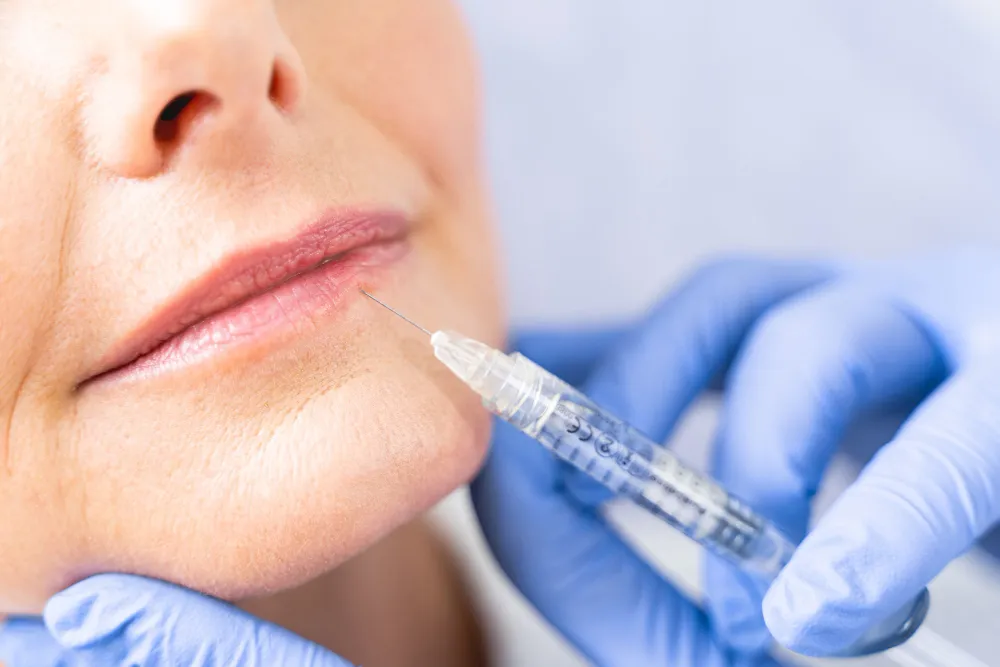

You got lip filler, the swelling is settling, and now you can feel something that wasn't there before: a bump, a firm spot, an uneven ridge under the surface. It's unsettling to notice, and the internet doesn't make it any less confusing.
Most lip filler lumps are normal and temporary. Some are worth a call. This post covers both: what causes lumps after lip filler, which timeline is reassuring, and which signs mean you should not wait.
What does this article cover?
- What causes lumps after lip filler and when they are expected
- The difference between early lumps and delayed nodules
- Signs that a lump warrants a call to your provider
- What to do if you find a lump
Key takeaways
- Lumps in the first one to two weeks are almost always swelling, early product settling, or bruising, not a complication.
- Firm, smooth, non-tender lumps that form weeks to months after treatment are more likely to be delayed-onset nodules and are worth having checked
- Lumps from too much product or filler placed close to the surface may not fade on their own and are worth having checked.
- Red flags that need a prompt call: worsening pain, skin discoloration, increasing swelling after day 3, or any white or blue discoloration near the treated area
Why lumps form after lip filler
Lip filler is placed into tissue, and tissue responds. Some of what you feel in the first week isn't the product itself; it is the tissue reacting to the injection, which involves localized swelling, possible bruising under the surface, and the product still integrating.
A few specific reasons lumps form:
Swelling. Lip skin is thin and has very little cushion. Swelling after filler can feel lumpy and uneven, particularly in the first few days. It tends to be soft, shifts slightly with pressure, and is worse in the morning. This is not a complication.
Product that hasn't settled. Hyaluronic acid filler is hydrophilic; it attracts water. In the first week, some patients feel firmness or uneven texture as the product absorbs moisture and integrates with the surrounding tissue. As it settles, the surface smooths.
Overfilling or superficial placement. When more product than the tissue can accommodate is placed in one area, or when filler is placed too close to the surface, a visible or palpable lump results. These may persist and require an in-person evaluation by a professional.
Delayed-onset nodules. These form weeks to months after treatment, feel firm and smooth on the surface, and are not warm or tender. The cause is not fully established, but they are thought to involve a foreign body response to the filler material.
Inflammatory nodules. Less common. Tender, red, sometimes swollen. Can appear from weeks to over a year post-treatment. These need evaluation.

Expert tip: One of the most common causes of a "lump" call in the first week is actually asymmetrical swelling, not an uneven result. Swelling rarely distributes perfectly evenly, so one side can feel puffier or lumpier than the other during the first seven to ten days. Wait until day 14 to assess the actual shape of your result. What looks uneven at day 5 often looks even at day 14 once the swelling clears.
What is normal in the first two weeks
If you are still feeling a noticeable lump at the two-week mark after swelling has resolved, that is the right time to contact your provider for a follow-up.
Lumps that form later: delayed-onset nodules
If you had lip filler and felt fine for several weeks or months, then noticed a firm lump appearing later, that is a different category.
Delayed-onset nodules (DONs) tend to show up anywhere from a few weeks to several months post-treatment. They feel firm and smooth, usually without redness or tenderness. They are not the same as the early swelling-related lumps that clear in the first two weeks.
This is not a reason to panic if you feel a lump two months after treatment. It is a reason to call your provider rather than wait longer, since an earlier check gets you answers sooner.
Signs to call your provider right away
Some signs aren't about lumps specifically; they are about the tissue's response to the product. These need prompt attention:
The first three items on that list, discoloration, sudden pain, and blanching, are not about lumps. They are vascular warning signs and are time-sensitive. If you notice any of them, contact the provider who treated you the same day, not at your next scheduled appointment. If you cannot reach them right away, go to an emergency room.
What to do if you find a lump
Most of the time, the right first move is to wait and watch. A few habits make that easier.
- Note the date you first felt it and take a photo in the same light each day.
- Check it against the table above and the warning signs
- Do not press, squeeze, or massage the area unless your injector tells you to
- Skip heat, hard workouts, and alcohol while the area is swollen
- Contact the provider who treated you if it is still there at two weeks, appeared weeks or months later, or looks red, tender, or warm
When you call, say when you had the filler, when you first noticed the lump, what it feels like, and whether it has changed. Photos help. The provider who placed your filler knows the product and the amount used, so they are usually the best first call.
Book a complimentary consultation at New Day Medspa to talk through lip filler placement, realistic results, and aftercare before your next appointment.
About New Day Medspa
New Day Medspa is a medically guided aesthetic practice at 6817 Southpoint Parkway, Suite 2501, Jacksonville, FL 32216. All lip filler treatments are performed by licensed ARNPs and PAs. A complimentary consultation covers your goals, placement, and aftercare before any product is used.
Suggested articles
Aftercare for Lip Fillers: What to Do From Day One to Week Two covers the full recovery timeline after lip filler, swelling, bruising, what to avoid, and when to expect the settled result.
The Best Dermal Filler Options for First-Time Patients: Types, Areas, and What to Expect explains the filler types used in different areas and what first-time patients should know before booking.
What Are Facial Fillers? Everything a First-Timer Should Know covers how hyaluronic acid fillers work, how long they last, and what to expect from treatment.